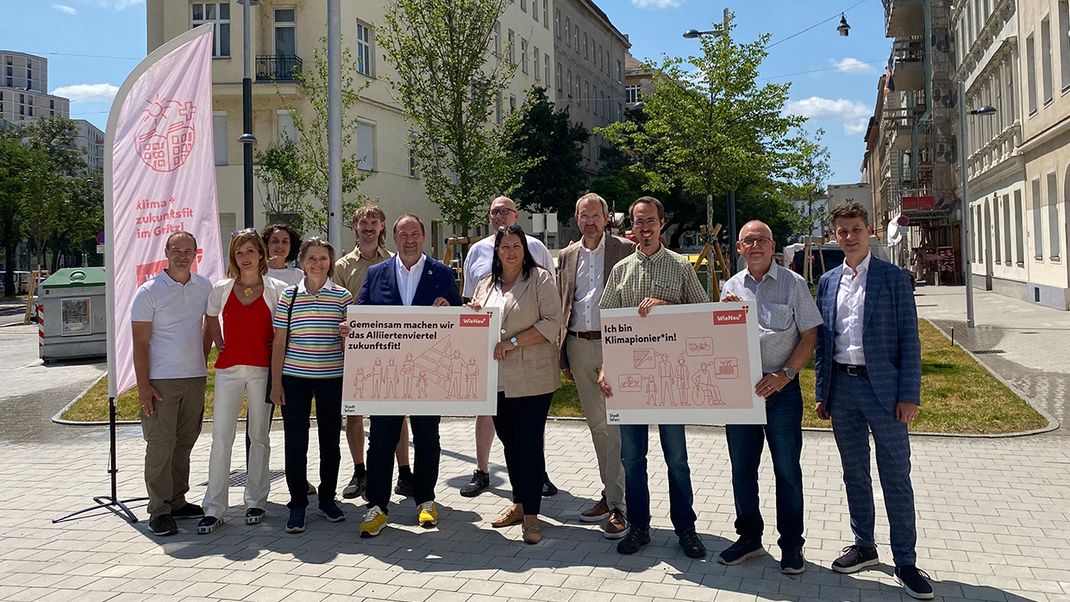
5.1 The Alliiertenviertel “climate pioneer neighbourhood”

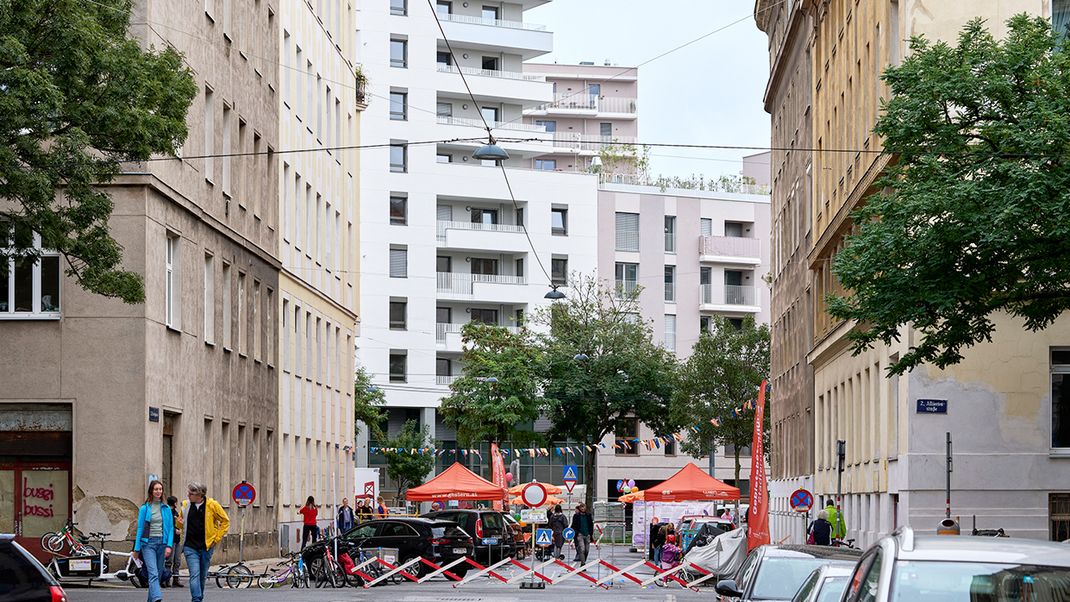
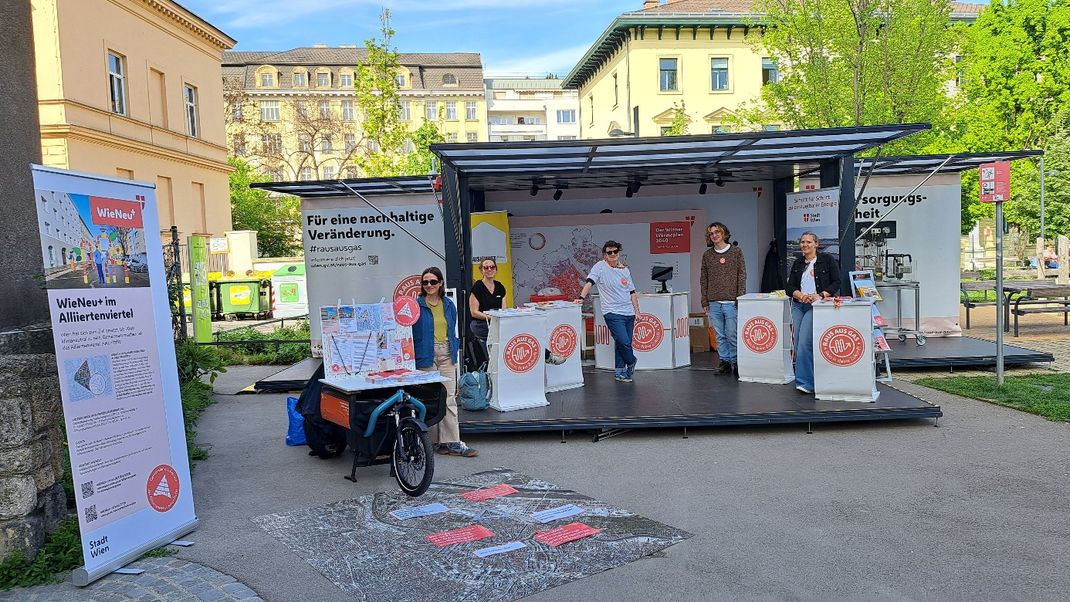
WieNeu+ has been intensively involved in the Alliiertenviertel "climate pioneer neighbourhood" over the past few years and will continue to proactively support the regeneration process going forward. Supported by the Austria-wide Climate-neutral City Mission, the teams from WieNeu+ and its project partners – such as the Local Area Renewal Office – provided local residents and property owners with ongoing information and advice on refurbishment, funding schemes, alternative energy sources and many other topics.
Find out more here:
"The special thing here is that we're preserving the existing built fabric and making it fit for the future. We're active on the ground in the Alliiertenviertel neighbourhood, for instance with outreach events about retrofitting of district heating networks, as well as refurbishment, greening and community-building projects. In 15 years' time, the Alliiertenviertel neighbourhood will be a thriving example of successful gentle urban renewal." (Jennifer Puchner, WieNeu+, City of Vienna – Municipal Department for Technical Urban Renewal)
"Working together for a future-fit Alliiertenviertel!" was the motto as WieNeu+ and the Local Area Renewal Office initiated and organised numerous outreach events and workshops on the "Future-fit Alliiertenviertel" theme during the project's timeline.
Events and consultations
9 outreach events in the Alliiertenviertel neighbourhood
1 street party
200 attendees at outreach events and street party
115 contacts established with property owners (buildings and individual flats), tenants and property management companies
34 consultations provided and contacts established by Hauskunft, Wohnfonds and WieNeu+
on district heating, switching to renewables, refurbishment, greening, etc.
50% of the buildings in the Alliiertenviertel neighbourhood have been reached to date
Neighbourhood facts & figures
Total area of neighbourhood approx. 9 ha
Built-up area approx. 3.5 ha
67 buildings
Approx. 1,800 dwelling units
Approx. 2,800 residents
762 property owners
Of which 40 sole owners
Existing building stock mainly from late 19th century
Energy supply
1 building connected to district heating grid
1,200 dwelling units with gas supply, 600 of which with gas cookers
Estimated solar potential approx. 800 kWp
1 public e-charging point
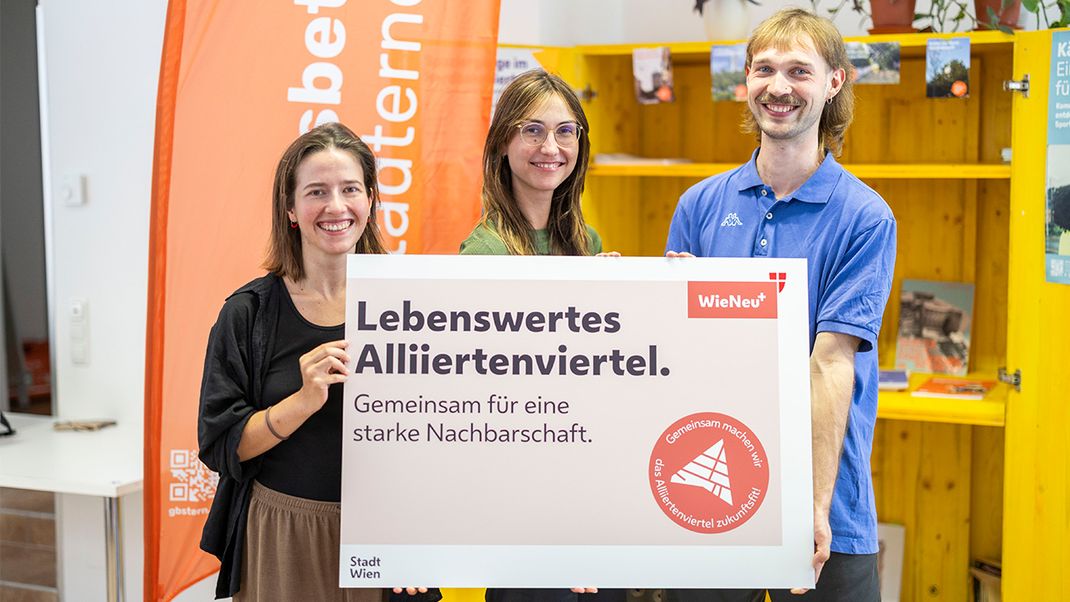
"In the Alliiertenviertel climate pioneer neighbourhood we worked with WieNeu+ to get to know our neighbours even better, organising events, initiatives and shared projects on the ground to provide them with targeted support in their drive to build a climate-resilient, future-fit neighbourhood." (Nino Gamsjäger, member of GB* team, works for WieNeu+ on the Alliiertenviertel "climate pioneer neighbourhood" project)
Building on change: working together for a sustainable future
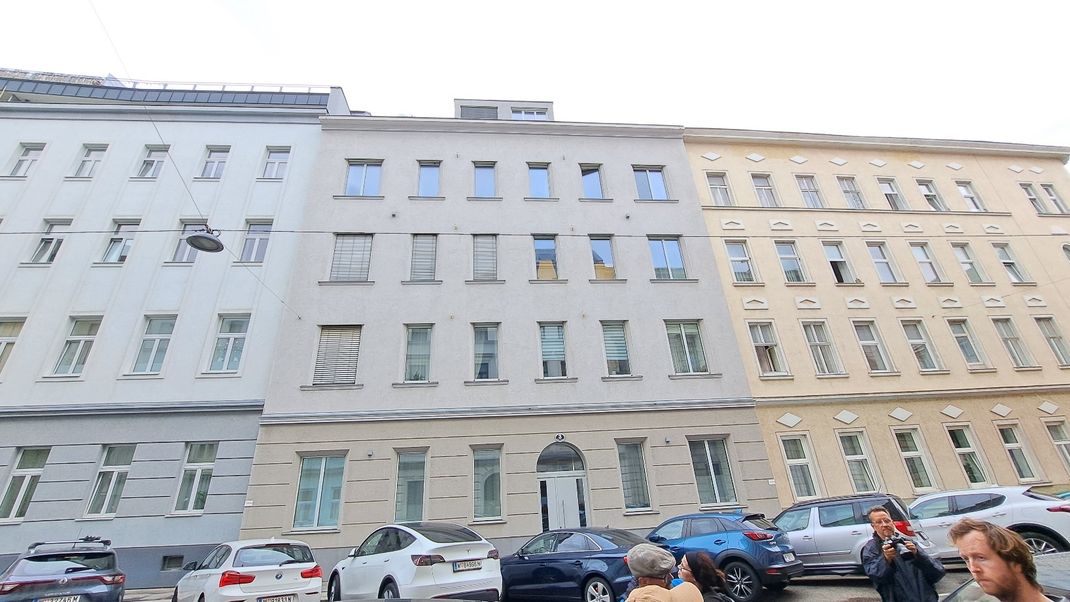
Thermally insulated buildings are an essential step towards a climate- and future-proof neighbourhood. Insulated buildings consume significantly less energy, which in turn means that they also save costs.
A showcase project from the Alliiertenviertel neighbourhood is the late-19th-century residential building at Eberlgasse 3, the first in Vienna to be fully refurbished to passive energy standard.
Further showcase projects can be found on the website of the "100 Projects Phasing Out Gas" initiative.
Find out more here: https://www.wien.gv.at/umwelt/100-projekte-raus-aus-gas (German)
Vienna’s “climate pioneer neighbourhoods” and “Phasing Out Gas”
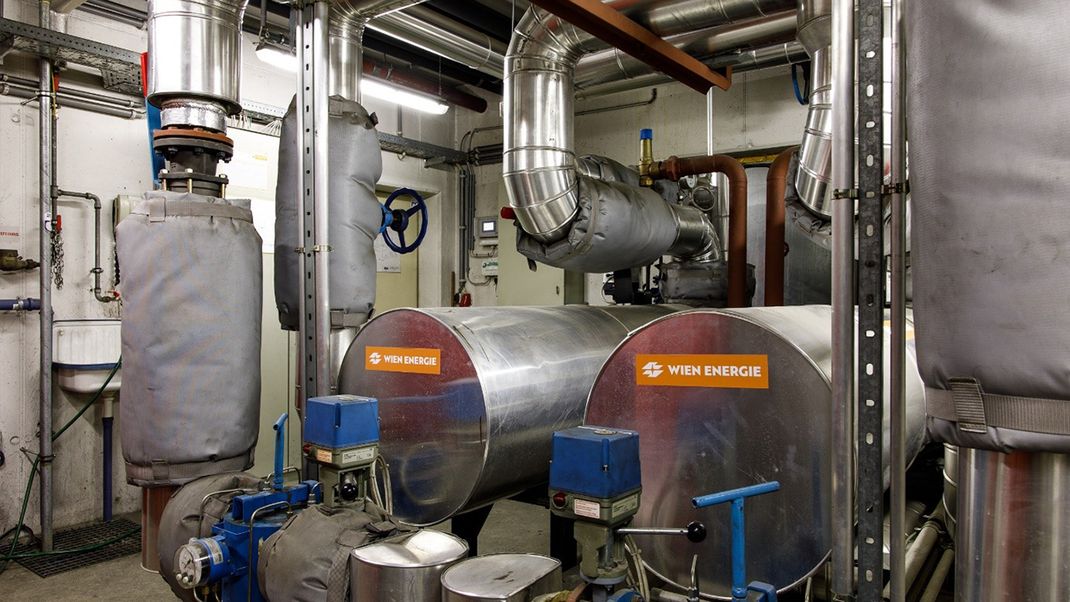
One of the City of Vienna's future objectives is to achieve net zero (Vienna Smart Climate City Strategy, Climate Protection). Phasing out fossil fuels, in particular natural gas, plays an essential role in this. At present, over 600,000 households in Vienna still use natural gas for heating, cooking and hot water supply, which is why the City of Vienna launched its "Phasing Out Gas" programme. As part of the programme, four "pioneer neighbourhoods" have been designated for expansion of the district heating grid. These neighbourhoods are to provide initial takeaways and lessons for the future, while local residents and property owners receive special targeted support and funding. The four "pioneer neighbourhoods":
- Alliiertenviertel
- Gumpendorfer Straße
- Huber-Block
- Rossau
Expansion of the district heating grid in the Alliiertenviertel neighbourhood
In a first phase, to equip the residents of the Alliiertenviertel neighbourhood for future access to a district heating supply, Wien Energie and Wiener Netze installed a primary district heating main together with a high-capacity underground substation. Since summer 2025, none of this has been visible on the surface. The square on Alliiertenstraße was redesigned, landscaped, and is now an amenity space with free public access.
Find out more here: Current timetable of works (Wien Energie) (546 KB PDF) (German)
How to apply for the City of Vienna's decarbonisation bonus (German)
“Climate-neutral Alliiertenviertel” study
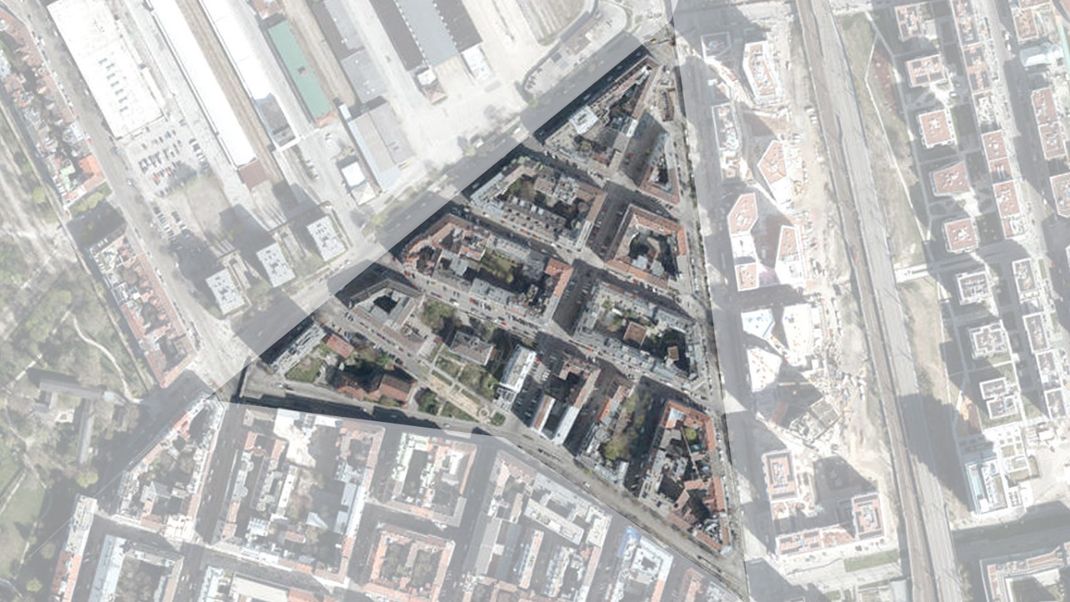
In 2025, on behalf of WieNeu+ (Municipal Department for Technical Urban Renewal), the FH Technikum Wien university of applied sciences carried out a study entitled "Climate-neutral Alliiertenviertel". The study explores possible scenarios for the phase-out of fossil fuels in the buildings sector.
Takeaways & challenges
- Following evaluation of the status quo and the maximum potentials ("maximum technical scenarios"), "realistic scenarios" show how many buildings actually have to be retrofitted to achieve the aim of reducing final energy consumption.
- The study shows that a shift from gas to district heating combined with thermal insulation of buildings can deliver significant reductions in greenhouse gas emissions. Vienna's climate target of reducing per capita final energy consumption for heating, cooling and hot water by 20% can be achieved with a thermal retrofitting rate of 2.5% – i.e. retrofitting of two buildings – per year.
- A complete phase-out of gas for heating would require conversion of the heating and hot water systems in 80% of the buildings, corresponding to an annual boiler replacement rate of approx. 5%.
- This means that everyone can make a significant contribution to the transition to clean energy while simultaneously seeing a long-term reduction in their own energy costs.
More about the "Climate-neutral Alliiertenviertel" study (German)
Project partners
- Wien Energie (municipal energy provider)
- Wiener Netze (municipal utility infrastructure)
- Local Area Renewal Office (GB*Mitte)
- wohnfonds_wien (Vienna Fund for Housing Construction and Urban Renewal)
- Urban Innovation Vienna (UIV) (climate and innovation agency of the City of Vienna)
- City of Vienna – Municipal Department for Energy Planning (MA 20)
- FH Technikum Wien (university of applied sciences)
Pioneers of the Alliiertenviertel neighbourhood
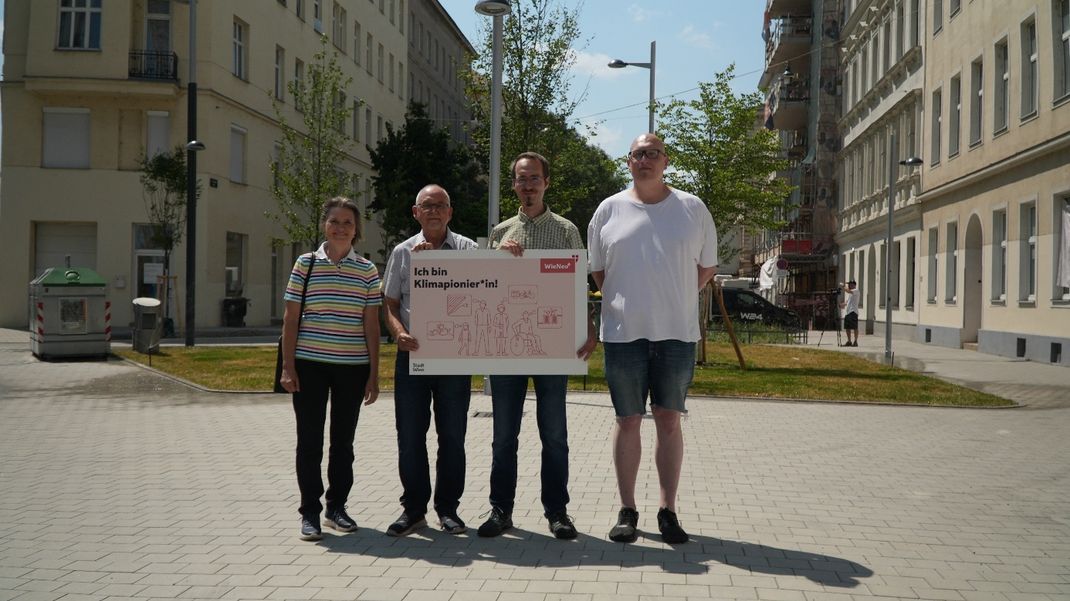
How can climate-proofing measures be rolled out in the neighbourhood? What projects can make the neighbourhood an even more pleasant place to live? The climate pioneers of the Alliiertenviertel show how it's done. See for yourself how our climate pioneers and their various projects are helping to make the Alliiertenviertel fit for the future. In 2025 we worked with the Municipal Department for Communication and Media (MA 53) to produce a video clip with voices from the Alliiertenviertel to inspire others to follow their example.
"WieNeu+ talks to property owners to discuss what options are available. They provide a huge amount of information in their outreach activities to get partners on board for shared projects." (Corinna Gulder, manager of a property in the Alliiertenviertel)