7.5 “Wiener Wäldchen” mini-woodlands project
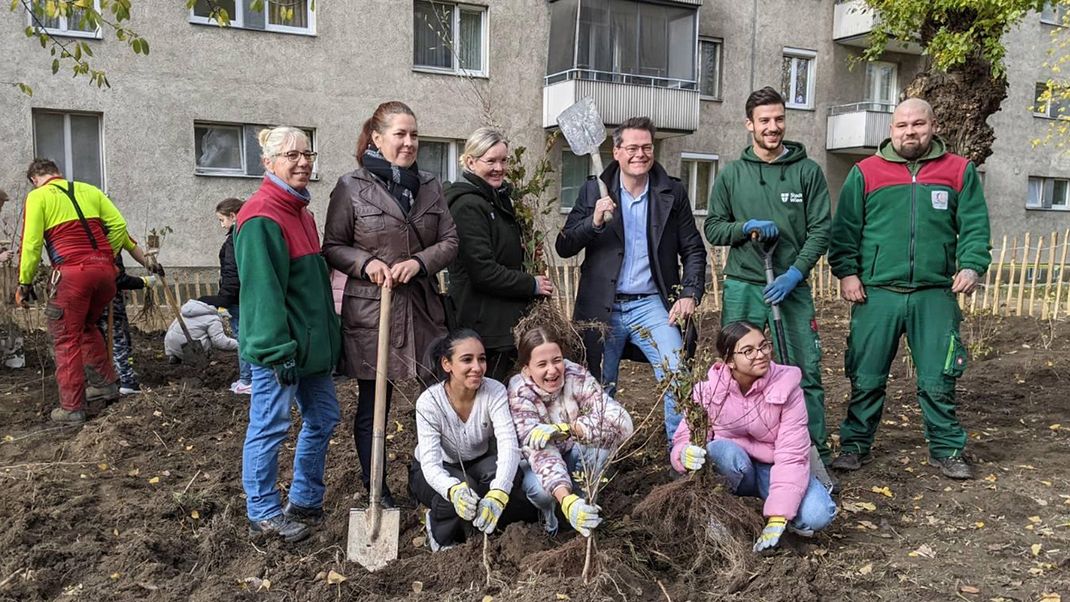
"Wiener Wäldchen" are very dense, highly biodiverse and fast-growing mini-woodlands covering an area approximately the size of a tennis court. The idea of planting small, fenced-off patches of wilderness ("Tiny Forests") in the middle of cities originated in Japan. As well as fostering biodiversity, after several years of growth the mini-woodlands should also have a noticeable cooling effect on their immediate environment.
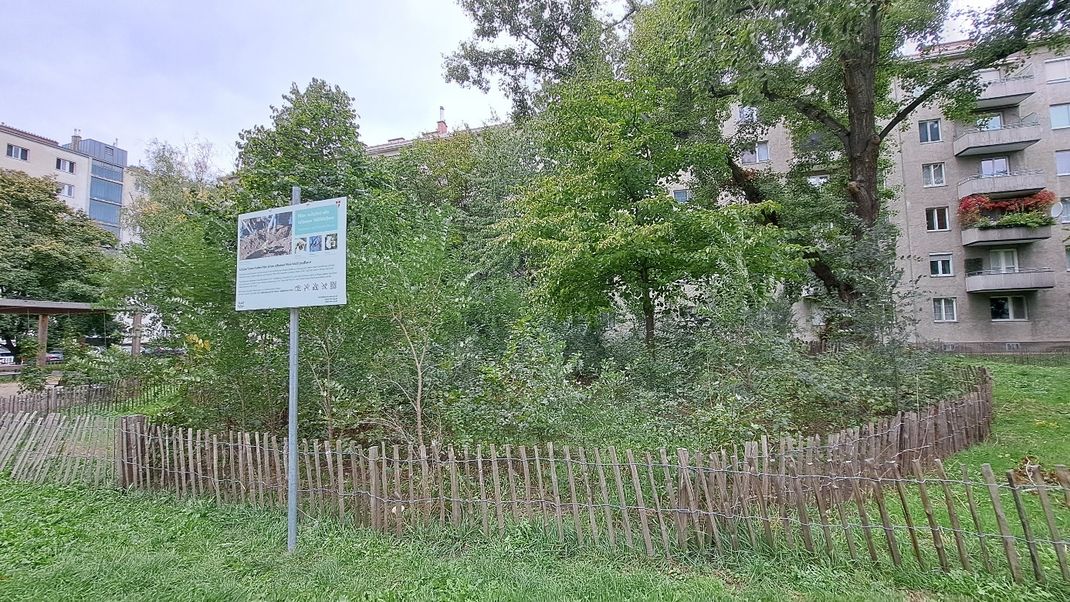
WieNeu+ took up this innovative idea and planted a "Wiener Wäldchen" at Pappenheimgasse 31 in the 20th district. The mini-woodland is thriving and has already become an invaluable patch of wilderness in the heart of the city.
The first "Wiener Wäldchen" was created in the Stefan-Weber-Park in the 5th district in 2022. At present there are fourteen of them all over the city. The medium-term objective is to find suitable sites for more of these mini-woodlands in all 23 municipal districts of Vienna.
Takeaways & challenges
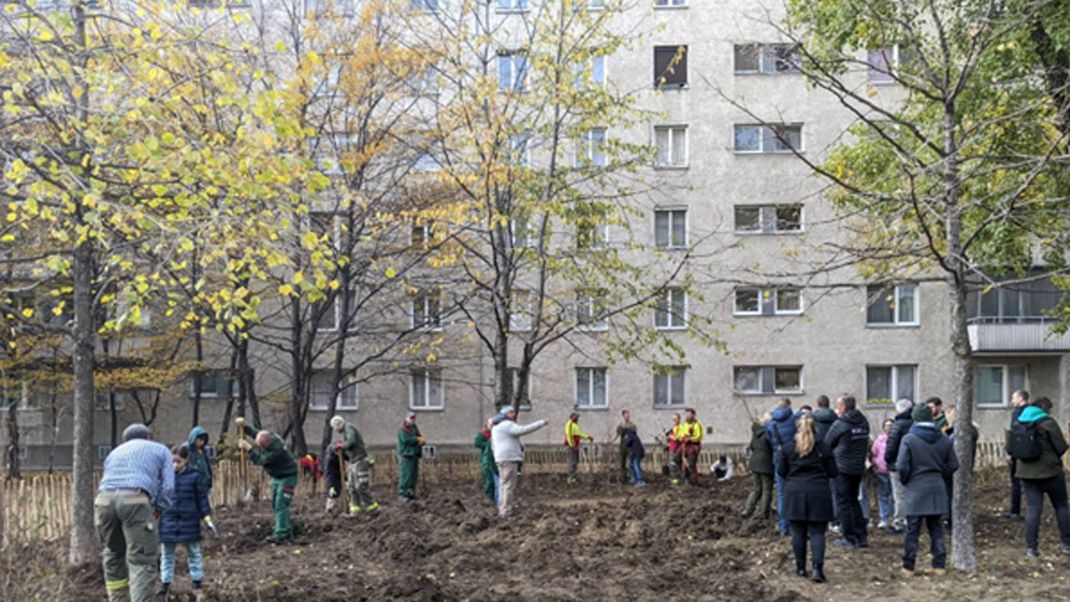
- The "Wiener Wäldchen" are growing well on all sites where they have been planted, despite the varying soil qualities and maintenance schedules.
- Universities, organisations and local authorities in Austria and abroad, as well as various departments within the Vienna municipal administration, have all shown great interest in the project.
- The opportunity to participate in the planting is very popular among (primary) school classes and is an aspect of the project that creates real added value in terms of environmental education.
- In the districts inside the Gürtel ringroad it is currently difficult to find suitable sites, as "residual spaces" have usually already been planted with trees and/or infilled with buildings, or do not appear suitable from the traffic safety perspective (e.g. trees obstructing lines of sight or overhanging the road).
Project partners
- City of Vienna – Municipal Department for Environmental Protection (MA 22)
- City of Vienna – Municipal Department for Parks and Gardens (MA 42)
- City of Vienna – Forestry Office and Urban Agriculture (MA 49)
- City of Vienna Chief Executive Office – Executive Group for Construction and Technology (coordinator)
- Municipal District Office for the 20th District
Find out more here: https://www.wien.gv.at/umwelt/wiener-waeldchen (German)