4.8 Circular refurbishment: Hartlgasse 22 (Sozialbau AG)
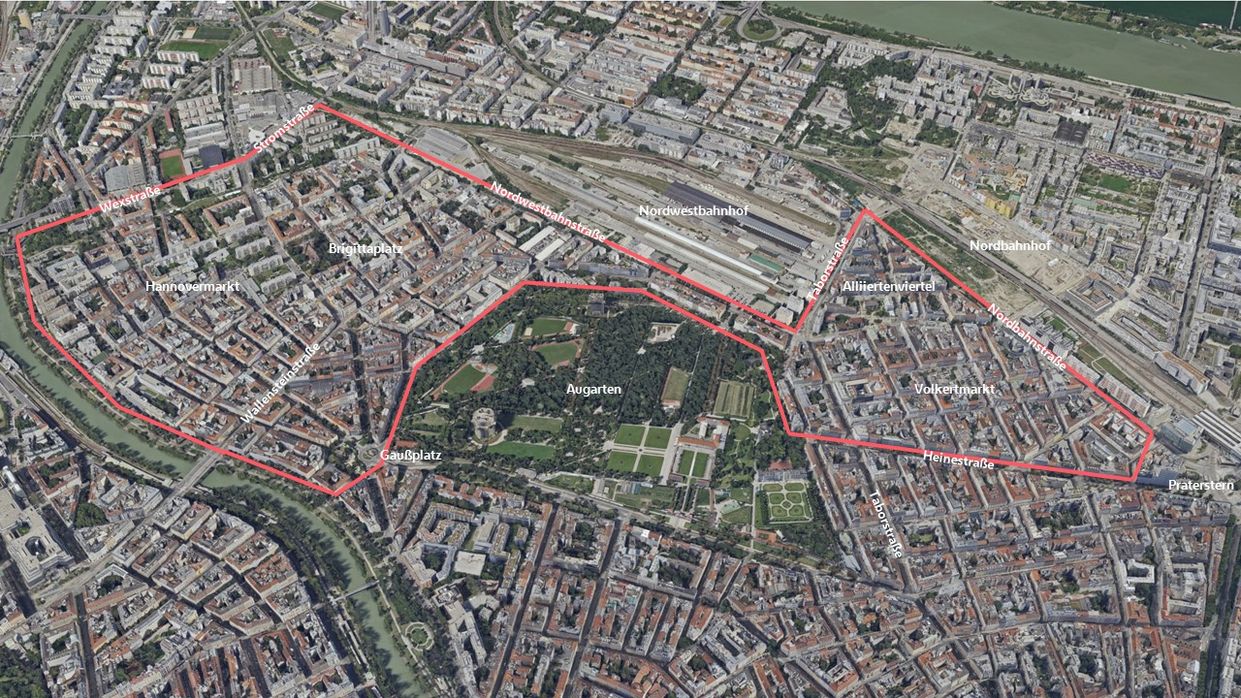
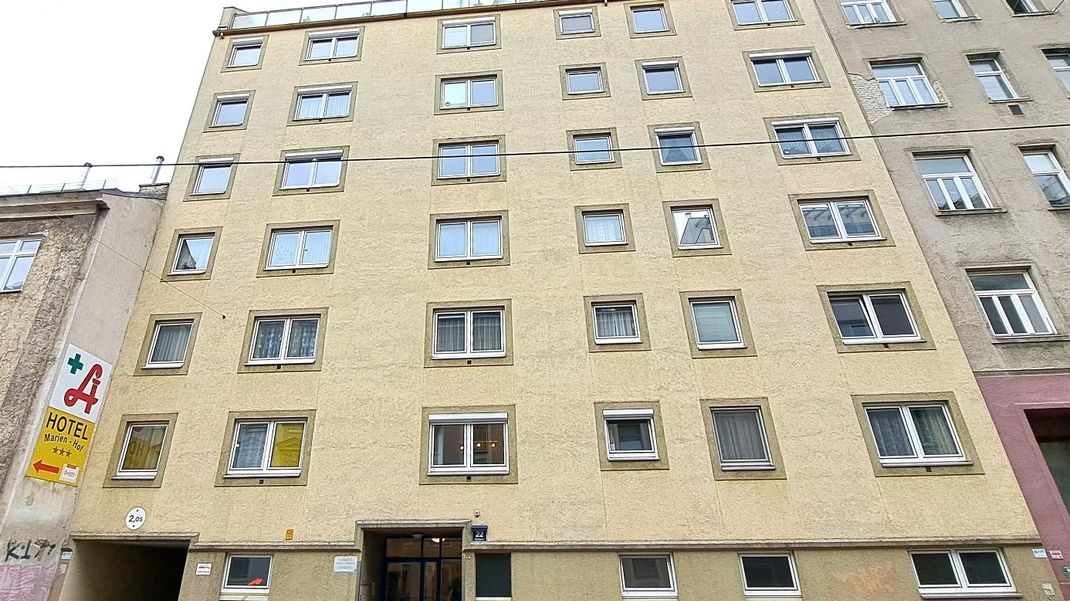
The study by Digital findet Stadt analysed the suitability of social housing in Vienna for refurbishment in line with circular economic principles. The pilot project is based on the residential building owned by Sozialbau AG at Hartlgasse 22 (20th district), dating from 1986, which serves as a model for economically feasible, scalable refurbishment measures in the social housing sector.
To this end, a targeted comparison was performed with the strategic corporate objectives of Sozialbau AG to identify synergies and priorities. A rough cost estimate was also carried out to arrive at a realistic assessment of economic feasibility.
Core objectives of the study:
- Assessment of circularity: Identification of criteria for assessment of circularity in the social housing sector.
- Identification of suitable building components and materials: Analysis of which elements of a typical residential building can be reused or recycled in the context of a refurbishment project.
- Optimisation of the refurbishment strategy: Development of generic measures to maximise circular impact in the context of building refurbishment.
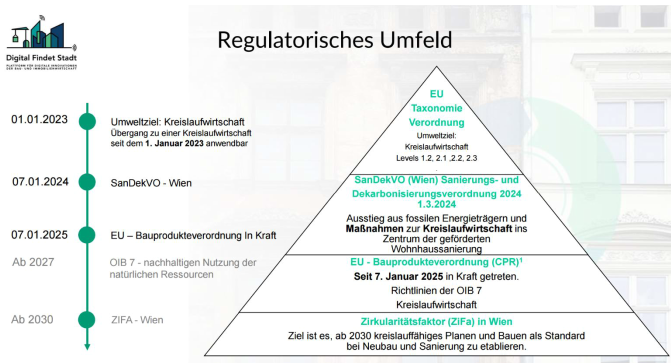
The study made reference to the criteria defined by the EU Taxonomy, OIB Guideline 7 and the Vienna Circularity Factor (ZIFA). It also tested the ability of various digital platforms (BIM, Madaster) to provide efficient verification, tracking and documentation of materials and carbon footprints.
Preservation of the load-bearing structure was a key focus, as this largely avoids the high CO₂ emissions associated with demolition and rebuild. Special attention was paid to the outer shell, durable windows, sustainable facade materials and removable, reusable interior finishing components.
Takeaways & challenges
- Based on the example of Hartlgasse, preserving the load-bearing structures saves 62% of CO₂ emissions over the lifecycle of the building.
- The outer shell is key: facades, windows and insulation offer the greatest leverage for reducing the global warming potential (GWP).
- The interior finishing has a lesser effect on GWP, but removable, reusable components (such as e.g. ceilings, floors, stair banisters, wall claddings) do have circularity potential.
- The typical structure of the property at Hartlgasse 22 means that the developed strategies are transferable and/or scalable to other social housing projects in Vienna.
- Sustainable materials can be more costly to start with, though they pay off in the long term thanks to their reduced carbon footprint, longer service life and lower disposal costs.
- The EU Taxonomy, OIB Guideline 7 and ZIFA define the basic criteria for circularity in refurbishment projects. Funding schemes – such as SanDekVo 2024 – provide a financial incentive to select sustainable materials and future-proof construction methods.
- BIM and digital building passports are useful tools to aid transparent documentation of building materials and sustainable, efficient design of the building lifecycle analysis.
This project was supported with funding from the "Grätzlförderung" scheme.
Project partners
- Sozialbau AG (non-profit housing association)
- Digital findet Stadt (digital platform for innovations in the construction sector)